 SVENNISAI

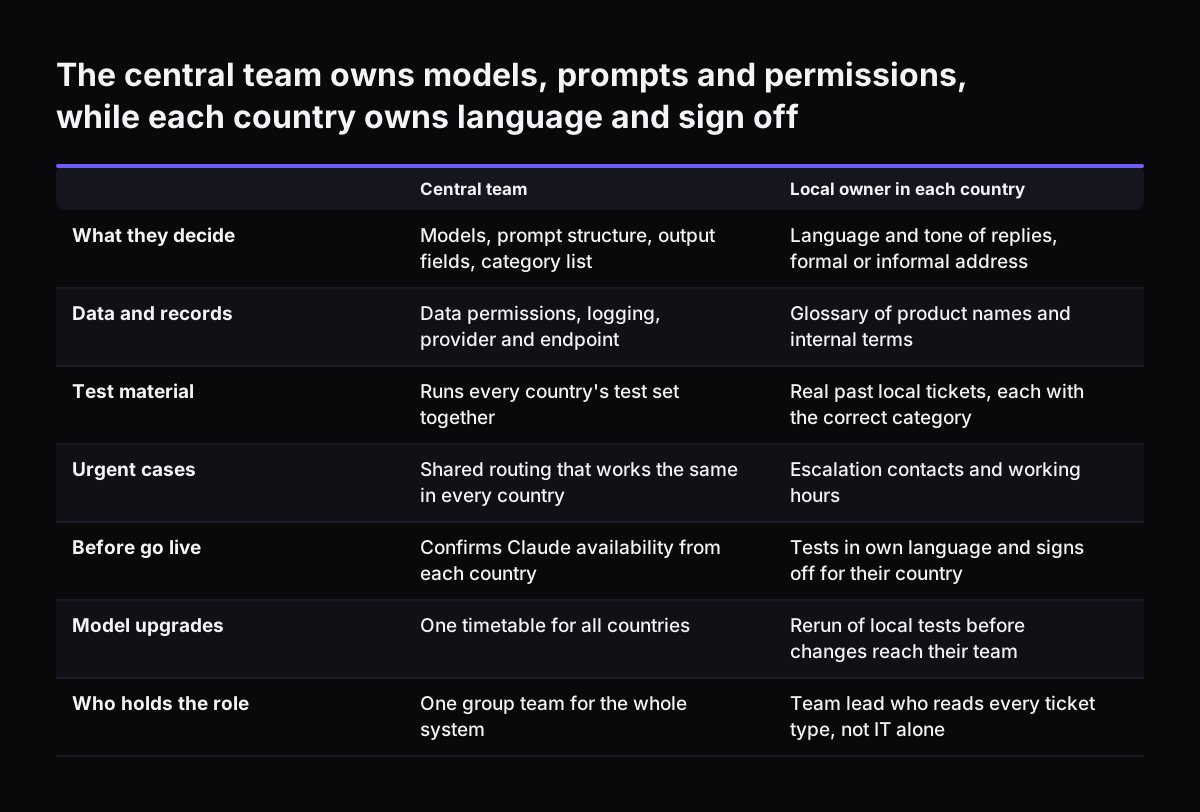
Rolling out Claude across several countries works when you build the system once and let each country change only a thin local layer. Settle the models, the prompt structure, the permissions, the audit trail and the provider centrally. Leave language, local examples, escalation contacts and go-live sign-off to a named owner in each country. The second country then becomes a configuration task, not a new project.
A staged multi-country rollout is one Claude-based system that you build and test in a first country, then release to one further country at a time. Each new country adds only its local layer. This guide plans that for one system across UK, German, Romanian and Italian teams. The example system sorts and drafts replies to tickets in Zoho Desk.
The split matters because the expensive parts are the shared ones. Choosing models, connecting systems, setting permissions and building tests take most of the effort. If each country redoes them, you pay four times. You also end up with four systems that behave differently, which nobody can support well.
The rest of this post covers the central decisions, the local decisions, a decision table, availability and provider checks, a worked example, testing, upgrades and what this means for a company in each of the four countries.